Strong branding builds strong businesses. The world’s most valuable brands are successful because they invest in their branding and do so consistently. While focusing on your brand isn’t going to skyrocket you to Coca-Cola’s level overnight, ignoring your brand kills any chance of standing out in your industry.
The good news? You can transform your brand - as long as you're willing to invest time, energy, and creativity into it. And with this comprehensive branding guide, you can build a badass brand - and successful business.
This guide will cover:
-
How to fine tune your brand’s messaging
-
How to create a strong visual brand
-
How to execute your branding
If you want to build a strong brand, this guide is for you.
Brand messaging
Before you can build your business, you need to figure out your brand. Who are you? How do you communicate that to the world? To find the answers, ask yourself these important questions.
1. Who are you talking to?
The easiest way to destroy your business is to try to talk to everyone. The best way to combat this is to talk to one specific person. Yes, ONE. It may sound crazy, but we’re the branding experts here, so trust us on this.
Create a Brand Advocate.
A brand advocate is the ONE person who would value your offerings the most. By targeting this fictionalized, single,avatar, you can motivate your real clients to take action. Analyze your brand advocate’s motivations, intentions, and personal history, and from there create tailored messaging designed to speak directly to them, instead of giving unclear signals that fail to define exactly who your business is for.
When it comes to creating your brand advocate’s persona, no detail is too small. You should know their family, their daily routine, their religious beliefs, even their exercise regimen. Knowing every single detail about your brand advocate gives you the tools to thoughtfully design a detailed experience for each of your customers.
Focusing on a singular brand advocate does not mean you are excluding all others. Your brand advocate would be excited about ALL of your offerings, and real people who are similar to your brand advocate would be excited about many of the same things. By focusing on one person, you are actually able to reach a wide range of people who would be interested in your offerings.
Pro tip: This is not a one-hour exercise. Spending a long time on your brand advocate, and truly knowing them inside out, is the best foundation you can lay for your brand.
Need more guidance? Download this worksheet to easily identify your brand advocate.
2. How do you fit into their story?
Once you know your brand advocate - seriously, every single thing about them - you need to spell out just how you fit into their story. Ask yourself:
-
What is your brand advocate trying to achieve?
-
What are your brand advocate’s pain points?
-
How can you help them reach their goals?
-
Why are they different after using your product/service?
Identifying your brand advocate’s journey, and how you can help them to succeed, will bring clarity to your sales funnel. It will show you what your clients need - and how you can help them get there. Tailor your messaging around these findings.
3. How can you communicate with your brand advocate?
Communicating with your brand advocate is two-fold: You must finetune your messaging and find the best platform for broadcasting your message.
What is your message?
The best way to finetune your messaging is to narrow it down to one line. (Do you see a theme here?) Marketing should be as specific as possible. Finding one line that pitches your business to your brand advocate will capture their attention and clarify your value. We call these “one-liners.”
Our company one-liner: Be a brand that takes a stand.
As a branding agency, we want to work with companies who stand for something, and our services help our clients to spread that message. We also pride ourselves in being a brand that, well, takes a stand. See how it comes full circle?
How will you share your message?
To effectively share your brand’s message, you need to meet your brand advocate where they’re at. If your brand advocate is 45, don’t focus your marketing efforts on Tik Tok. If your brand advocate is 18, LinkedIn probably isn’t going to yield results. Think back to your brand advocate’s journey, and tailor your messaging strategy accordingly.
Visual Brand
After you establish who you’re talking to and what you’re trying to say, you can dive into creating your visual brand. While you’re building your image, keep your brand advocate in mind.
1. Start with a vision board
Vision boards are a popular tool for wedding planning and home decor inspiration. But they’re also a powerful tool for your brand to lay out inspiration for the messages and feelings you want your brand to evoke.
What is a vision board?
A vision board is an important first step if you want your brand to look and feel, well, on-brand. You must think hard about your goal for your visual brand, because planning ahead will set you up for success. Here are a few questions to help you get started.
-
How do I want my brand to make people feel? Am I welcoming or exclusive? Warm or cold?
-
What symbols or graphic elements could I include?
-
What colors, fonts, or feelings do not align with my brand
The vision board provides direction and clarity before you start creating official concepts.
What does a vision board look like?

Here’s a vision board we created for our mid-MO neighbors, Les Bourgeois Vineyards. LBV is the official winery of Mizzou Athletics, and we were lucky enough to create their new sub-brand.
We came up with ideas for every element of their visual brand, including colors, fonts, patterns, and image styles. Click to enlarge the photo so you can see why it’s important we go in-depth with your vision board.
What next?
The vision board is meant to inspire the concept. It’s a place to see what works and what doesn’t, and often you will see a change from the vision board to the concept to the final product. This means that when it comes to vision boards, the main point is to make sure the brand is going in the right direction. Not every detail has to be perfect.
Once everyone is on the same page with your vision board, you can start creating your brand board.
2. Create a brand board
A brand board is the best way to keep your visual brand on-brand. It’s the document that you should come back to again and again until you’ve memorized it (and then come back some more). It lists all aspects of your brand from your fonts to your colors to patterns.
Don’t mix and match different elements each time you create marketing materials for your business—if you confuse, you lose! Use specific brand elements, and only those brand elements across all your materials, whether they're social media graphics or a new sign in your window.
Your brand board is a useful blueprint to reference whenever you create something for your business. It lays out all the important assets you’ll need: logo, sublogos, fonts, color palette, patterns, and textures. If you’d like to learn more about what each asset entails, here’s a detailed explanation.
What does a brand board look like?
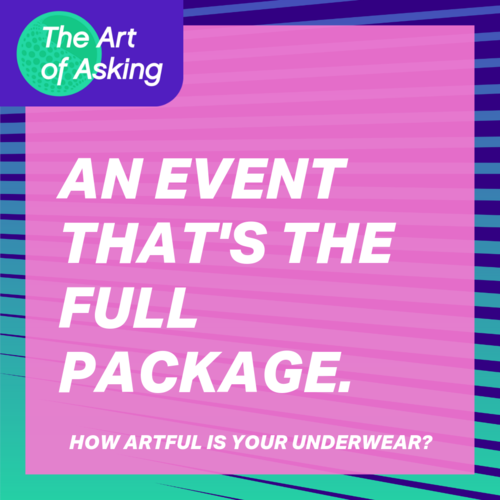
Whenever Spectrum Health Care created something for their Art of Asking event, an avant garde art showing with the intent to raise awareness for STI testing, they could reference this board to make sure they were on track and on-brand. With a simple glance, they are reminded exactly what logos, image styles, and textures they can use, and they know that anything else is off-limits.

Spectrum Health brand board

Spectrum Health posters (above) and social media posts (below)